
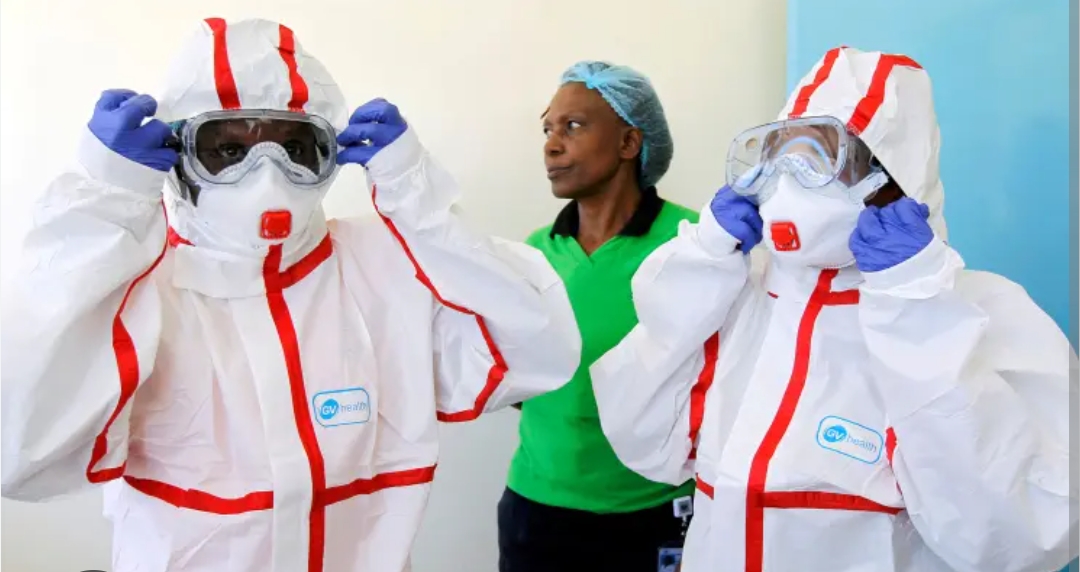
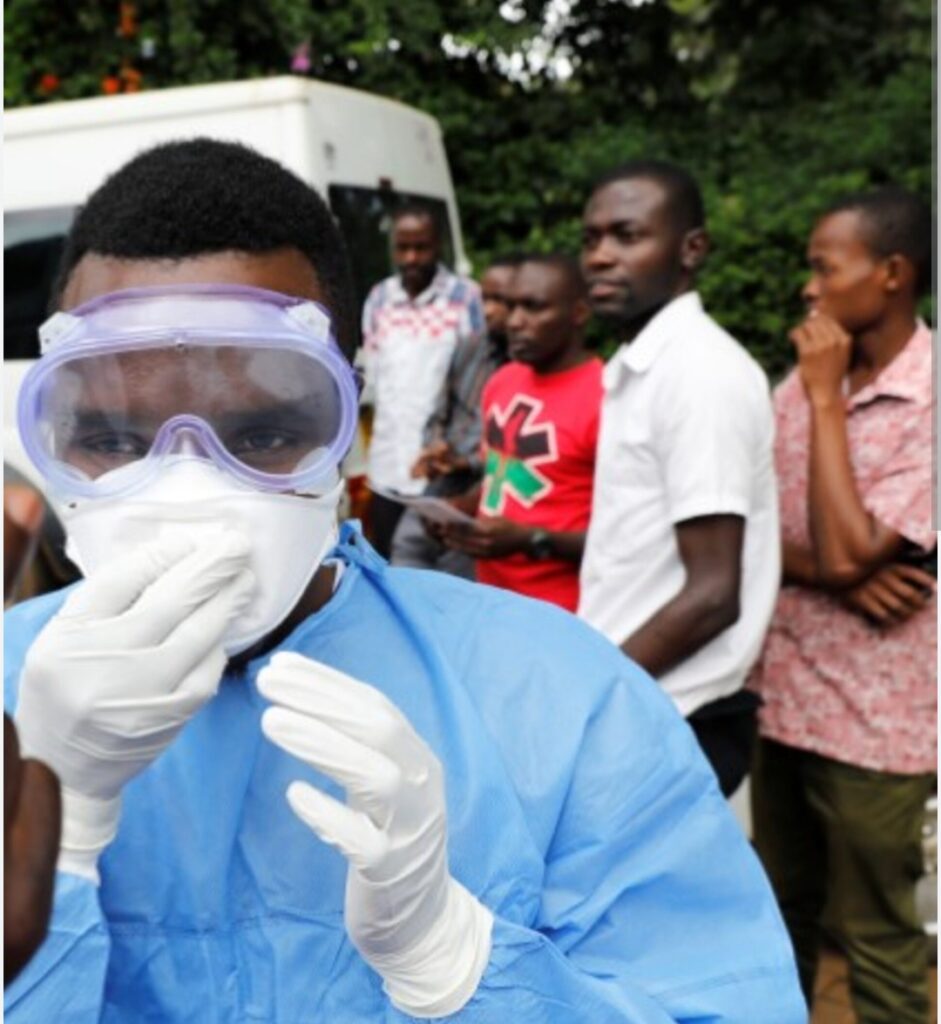
Policy and health governance experts have urged the Government to proceed with plans to establish a dedicated Ebola quarantine and treatment facility at Laikipia Air Base, arguing that the project is critical to strengthening Kenya’s national preparedness against future disease outbreaks and enhancing its role as a regional health security leader.
President Ruto maintains that Kenya has been receiving health related funding from US for the last 13 years and it’s time to reciprocate
Government insists that the proposed quarantine facilities will not only be used by British American soldiers in Laikipia but also by all other Kenyans in case of Ebola related cases
In a strongly worded statement released on Wednesday 3rd June, policy expert Osano Kute and health and governance specialist Alfred Obengo who was recently appointed by Nairobi Governor Johnson Sakaja at Pumwani Nursing School Board of Directors; said public debate surrounding the proposed facility should move beyond politics and focus on evidence-based policy considerations.
“The real issue is not whether the facility should exist but that Kenya secures its operation on terms that strengthen Kenyan sovereignty, health safety and biosafety, and regional leadership in research as a pillar in case management of vicious pandemics,” Mr Alfred Obengo stated.
He argued that Kenya faces increasing risks from emerging infectious diseases due to its regional security commitments and growing cross-border interactions, making investment in specialised quarantine infrastructure a strategic necessity rather than a policy option.
According to them, Laikipia Air Base presents the most suitable location for such a facility because it is already a protected military installation operating under strict security controls and military command structures.
They noted that the proposed quarantine centre would effectively be located within an already restricted zone, creating multiple layers of security that would be difficult to replicate in civilian settings.
“A secure military base is far safer than placing such a facility near dense civilian populations or in overstretched public hospitals,” Part of the statement read.
The experts further observed that the airbase falls under national government jurisdiction and military authority, making it a strategic national asset for responding to high-risk biological threats.
Kute and Obengo also cited Kenya’s military deployments in regional conflict zones, including eastern Democratic Republic of Congo, where outbreaks of Ebola and other viral haemorrhagic fevers have previously posed significant risks.
They argued that Kenya must have the capacity to safely receive, isolate and treat military personnel or other citizens exposed to dangerous infectious diseases during regional operations.
“If Kenyan personnel are exposed during such operations, the appropriate national response is to return them to a secure, specialised treatment and monitoring facility on Kenyan soil — not to depend on foreign hospitals or emergency improvisation,” they said.
The experts warned that failure to establish dedicated quarantine infrastructure would leave the country vulnerable during future health emergencies.
They further linked the proposed facility to Kenya’s broader ambition of becoming a regional leader in health security, medical research and emergency response.
Drawing comparisons with countries such as India and Germany, which developed advanced healthcare infrastructure before emerging as global treatment hubs, they said Kenya must invest in strategic medical facilities if it hopes to reduce dependence on foreign healthcare systems.
“Kenya cannot continue lamenting about medical dependence while rejecting opportunities to build strategic medical infrastructure at home,” they stated.
The experts maintained that the facility would complement existing national investments in health security, including laboratory capacity upgrades at the Kenya Medical Research Institute (KEMRI) and ongoing collaboration with the World Health Organization (WHO).
They pointed to the WHO Country Cooperation Strategy for Kenya covering the period 2024-2030, which prioritises strengthening health systems, improving emergency preparedness, enhancing research and innovation, and reinforcing Kenya’s leadership role in health governance.
According to the statement, the proposed Ebola facility would expand national capabilities in outbreak response, specialised isolation care, emergency logistics, clinical training and research collaboration.
The experts also argued that concerns raised by local communities and political leaders should not be ignored but instead addressed through stronger governance arrangements and public engagement.
“The objections that have emerged should be used to improve the arrangement, not to bury it,” they said.
Among their recommendations is the establishment of the facility under a framework that guarantees Kenyan legal jurisdiction, command authority and operational control.
They stressed that no foreign entity should exercise unilateral authority over patient admissions, facility activation or management of health data.
They also called for the integration of Kenyan health workers, military medical personnel and biosafety specialists from the project’s inception to ensure knowledge transfer and long-term national capacity building.
To address local concerns, Kute and Obengo proposed the creation of a community benefit framework for Laikipia County. Such a framework, they said, should include investments in emergency healthcare services, clinical training programmes and institutional support for local public hospitals.
The experts further recommended an independent review of the facility’s biosafety systems, governance arrangements and operational procedures before commissioning. The review, they suggested, should involve Kenyan public health experts, legal scholars, biosafety specialists and community representatives, with findings made public.
While acknowledging public anxiety surrounding the project, the experts maintained that preparedness remains the most effective response to future health threats.
“The case for the Laikipia Ebola facility rests on strategic logic, sovereign necessity, and the straightforward imperative that a state which seeks regional leadership must possess the infrastructure that leadership demands,” they said.
They concluded that Kenya should proceed with the project transparently and on terms that prioritise national interests while strengthening the country’s capacity to respond to future pandemics and other biological threats.
“Kenya should and must build the facility. It should do so firmly, transparently, and on Kenyan terms. That is not weakness. It is what sovereignty looks like when it is expressed through preparedness and strategic confidence,”.