


Nominated Senator Tabitha Mutinda Challenges Young Journalists to Create Jobs Through Digital Content Industry
Kenya’s creative industry loses an estimated Sh92 billion annually due to piracy, with stakeholders now pushing for tougher enforcement of copyright laws and digital regulations to curb the vice
Speaking during the closing of a three day East African 2026 Broadcasters Convention organized by Association of African Professional Broadcasters in Nairobi, Nominated Senator Tabitha Mutinda disclosed that legislators are waiting for recommendations from the Ministry of Information, Communication and the Digital Economy to enable them to come up with an enabling legal framework that will address revenue loopholes in the sector of the digital content
“We are very optimistic that the recommendations will give us (legislators) policy document with guidelines before we come up with a legal framework that will protect this industry because we are losing billions of shillings that would otherwise fund the much needed infrastructure and our health systems,” United Democratic Alliance Nominated Senator Mutinda stated.
Mutinda challenged younger journalists to be more ethically responsible even as they use artificial intelligence and cloud technology, emphasizing the need to follow up footsteps of veterans professional broadcasters by instilling professionalism and upholding African values and customs
The event brought together over fifty retired professional broadcasters who are members mainly from Kenya Broadcasting Corporation and other countries of the world, under their Association of Professional Broadcasters ( APB) Chairperson Tabitha Mutemi, who’s former IEBC long serving Director of Communications
She underscored that the forum had provided a critical platform for discussions on the future of broadcasting in East Africa amid advancements in technology and the rise of Artificial Intelligence (AI).
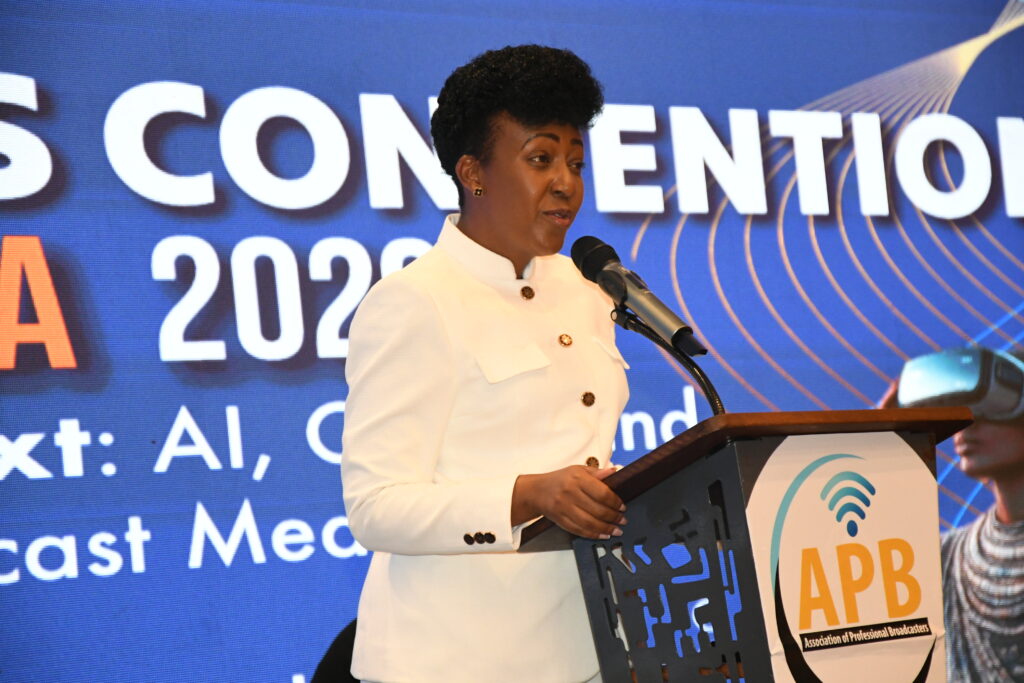
Mutinda noted that the conference brought together broadcasters, government officials and private sector players from across the East African region to deliberate on challenges and opportunities shaping the media industry
“Broadcasters and media stakeholders need to embrace emerging technologies and strengthen mentorship programmes to prepare young journalists for the rapidly evolving media landscape, “She added
While speaking during the discussions on broadcast and digital content piracy, the founding chairperson of the Partners Against Piracy Association of Kenya Mike Strano, noted that piracy continues to deny creatives, broadcasters and the government significant revenue while undermining growth of the country’s creative economy.
Strano, who is the Director of Yakwetu Africa, a Kenyan entertainment technology startup that acts as an online retailer and distributor of African digital content, noted that the 2021 study on piracy losses did not include broadcast piracy, warning that the figures could now be much higher.
“Kenya’s creative industry loses Sh92 billion per year to piracy, and within that amount, about Sh17 billion is unpaid taxes to the Government of Kenya,” he said.
He added that piracy has particularly affected local content producers and broadcasters, with many creative works being illegally shared online, monetized and used in the public domain without credit or attribution.
According to the expert who drives my Africa movies, said copyright infringement penalties in Kenya are stringent, with offenders facing fines of up to Sh800,000 and prison terms of up to 10 years for every count of infringement.
“Kenya’s copyright law on infringement is actually quite good and holds serious penalties, however, the challenge has largely been weak enforcement of these existing laws and lengthy court processes that discourage prosecution of offenders,” ,” he stated
According to the stakeholders, including Digital Broadcasters Association (DBA) Chair Joel Waweru, which has about 100 local registered members and three from abroad, said digital piracy has become more sophisticated, especially in broadcast media where unauthorized streaming and illegal redistribution of local television content continue to rise.
YOU ALSO MISSED: https://safinews.co.ke/ps-isaboke-mutemi-encourages-journalists-to-help-one-another/
The officials noted that internet service providers (ISPs) have a critical role in combating piracy through blocking of infringing online locations and websites, a practice already implemented globally.
“The technology exists in Kenya. It is the same technology used against cybercrime and can also be applied on a voluntary basis as is done internationally,” strano explained.
He further disclosed that stakeholders are currently engaging ISPs to support implementation of copyright protections through revenue safeguarding mechanisms and site-blocking initiatives.
To strengthen anti-piracy interventions, the Partners Against Piracy Association of Kenya has co-convened a national steering committee on digital piracy under the Ministry of Information, Communications and the Digital Economy.
The committee, which began its work on March 12, is expected to present recommendations to stakeholders by June 22.
Stakeholders expressed optimism that the recommendations will pave the way for stronger regulations, faster judicial settlements and more effective enforcement mechanisms against piracy.
They argued that enhanced protection of intellectual property rights would not only safeguard artists and broadcasters but also boost government revenue and support growth of Kenya’s creative sector.
Yakwetu Africa is a digital platform hosting one of the country’s largest online collections of Kenyan films, emphasising the fight against piracy_ which must involve all stakeholders including regulators, broadcasters, creatives, ISPs and the judiciary.
READ ALSO: https://safinews.co.ke/ps-isaboke-mutemi-encourages-journalists-to-help-one-another/
They added that local creatives continue to suffer huge financial losses as pirated content spreads rapidly across digital platforms, affecting investment in film, music, podcasts, audiobooks and television programming.
Stakeholders now want the government to intensify the crackdown on piracy to protect Kenya’s growing creative industry and ensure artists fully benefit from their intellectual property.