
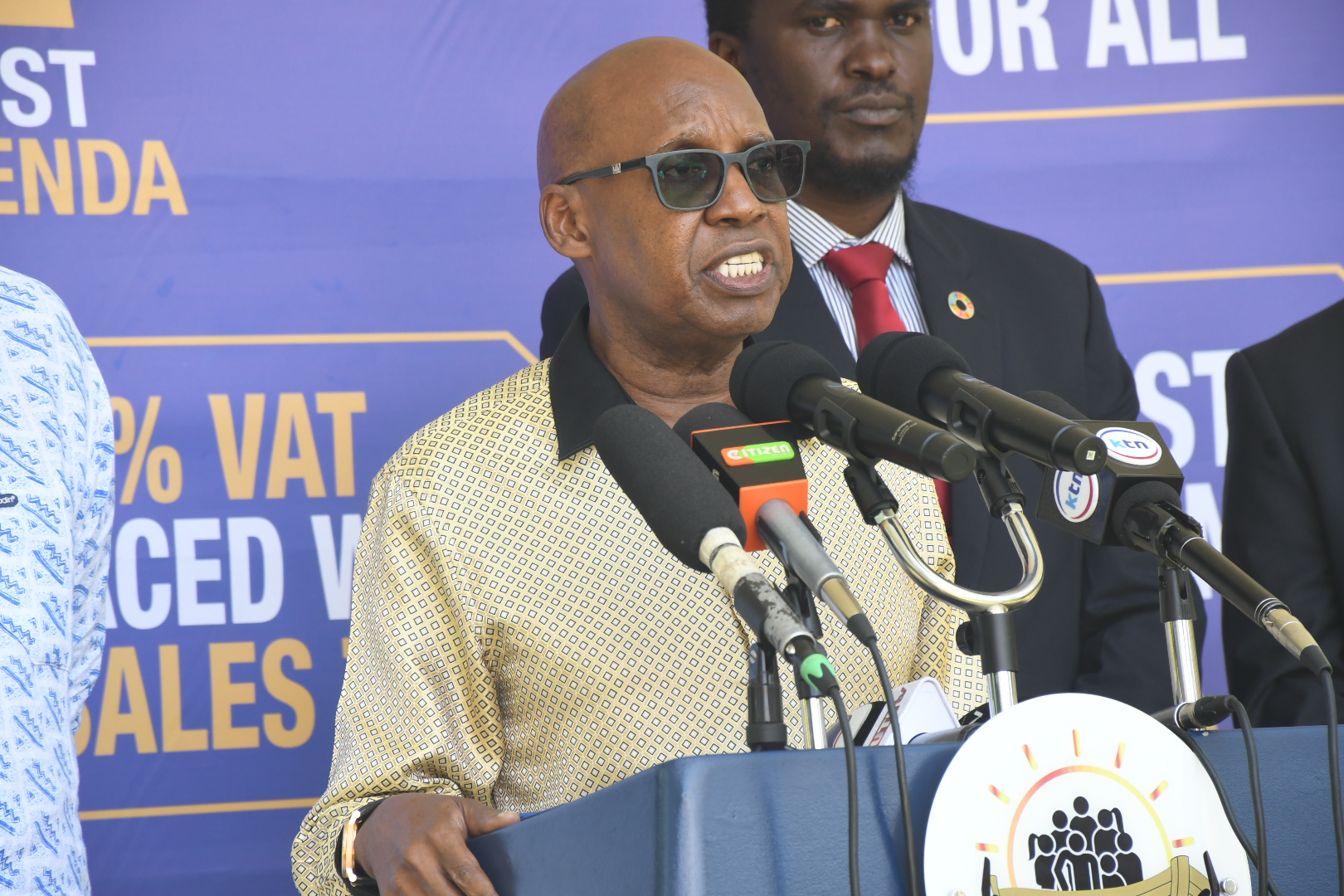
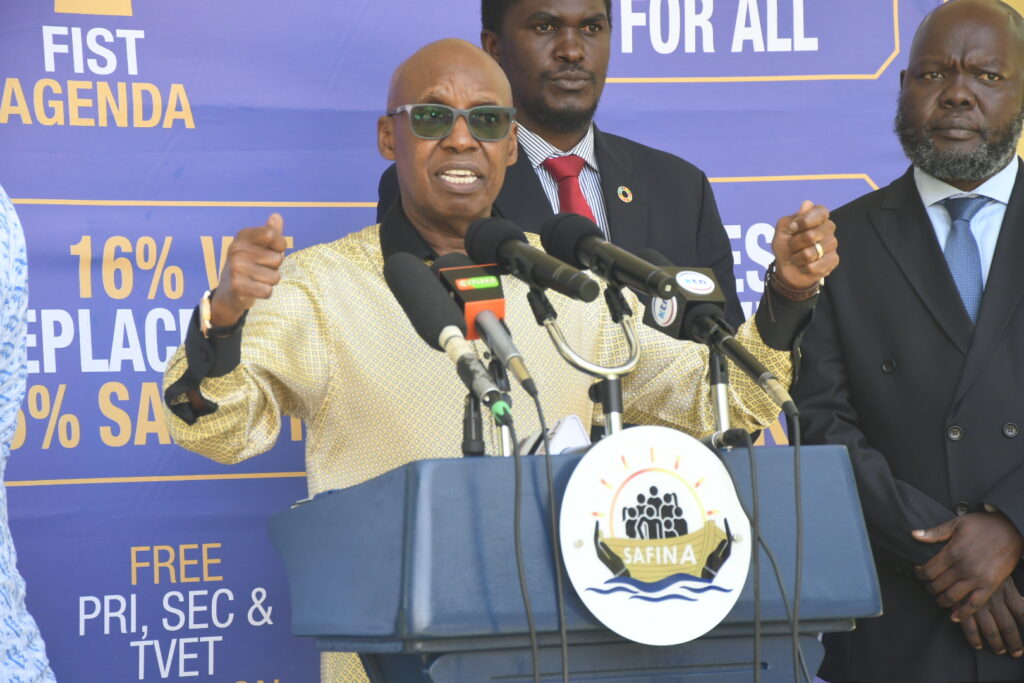
Presidential aspirant Jimi Wanjigi has proposed sweeping tax and financial sector reforms aimed at stimulating economic growth, increasing disposable income, and making credit more affordable for businesses and individuals.
The Safina Party leader claims billions of shillings in planned government borrowing lack proper legal grounding and could become a major issue in future
Speaking on Monday 15th June at Kwacha House in Westlands, Wanjigi said his administration would seek to abolish the current Value Added Tax (VAT) system and replace it with a simplified five per cent sales tax.
According to Wanjigi, the proposal would leave approximately Sh300 billion in the pockets of Kenyans by reducing the tax burden on consumers and businesses.
“We shall scrap VAT in total as a tax and replace it with a simple five per cent sales tax,” he said.
Wanjigi added that the VAT reform, alongside other planned measures, would inject an estimated Sh800 billion into the economy by allowing households and enterprises to retain more of their earnings.
He argued that the increased spending power would stimulate economic activity and help the country achieve higher growth rates.
“We are hoping that this will spur growth that will take us to six, seven, and hopefully by the third year, we will be at 10 per cent growth,” he said.
The businessman-turned-politician also identified domestic government borrowing as a major impediment to private sector expansion, saying it limits access to affordable credit.
Wanjigi pledged that his administration would reduce reliance on local borrowing, freeing up capital for entrepreneurs, manufacturers, innovators and self-employed Kenyans.
“When you don’t borrow domestically, you free up capital for innovation, entrepreneurs, people who are self-employed, manufacturers and everybody else,” he said.
He further promised to push for single-digit lending rates, targeting interest rates of about five per cent to make financing more accessible to businesses and content creators.
Wanjigi said affordable credit would encourage investment, boost productivity and create employment opportunities across the economy.
The proposals form part of his broader economic agenda, which seeks to accelerate growth through tax reforms, increased private sector participation and improved access to capital.
At the same time, Wanjigi accused the government of using taxpayers’ money to service what he termed “illegal debts”, calling for an urgent audit and review of Kenya’s public debt obligations.
He raised issues on why the State continues to repay debts whose legality, he argued, has not been fully examined.
“Kenya is paying illegal debts. Stop paying for illegal debt that was incurred during Uhuru’s time. It is hurting Kenyans,” he said.
According to Wanjigi, the billions allocated to debt repayment could instead be redirected to key sectors such as healthcare and education, which he said are underfunded due to heavy debt.
Wanjigi also faulted the government over continued borrowing, warning that the country’s growing debt burden is placing excessive pressure on taxpayers and constraining economic growth.
He said Kenya’s public debt, estimated at about Sh13 trillion, has reached unsustainable levels, with debt servicing consuming a significant share of government expenditure.
He further raised concern over rising domestic borrowing through Treasury bills and bonds, arguing that it risks crowding out private sector lending and slowing investment.
The Safina Party leader also called on Kenyans to reject the proposed Finance Bill 2026, arguing that it would deepen the tax burden on households already facing high living costs.