
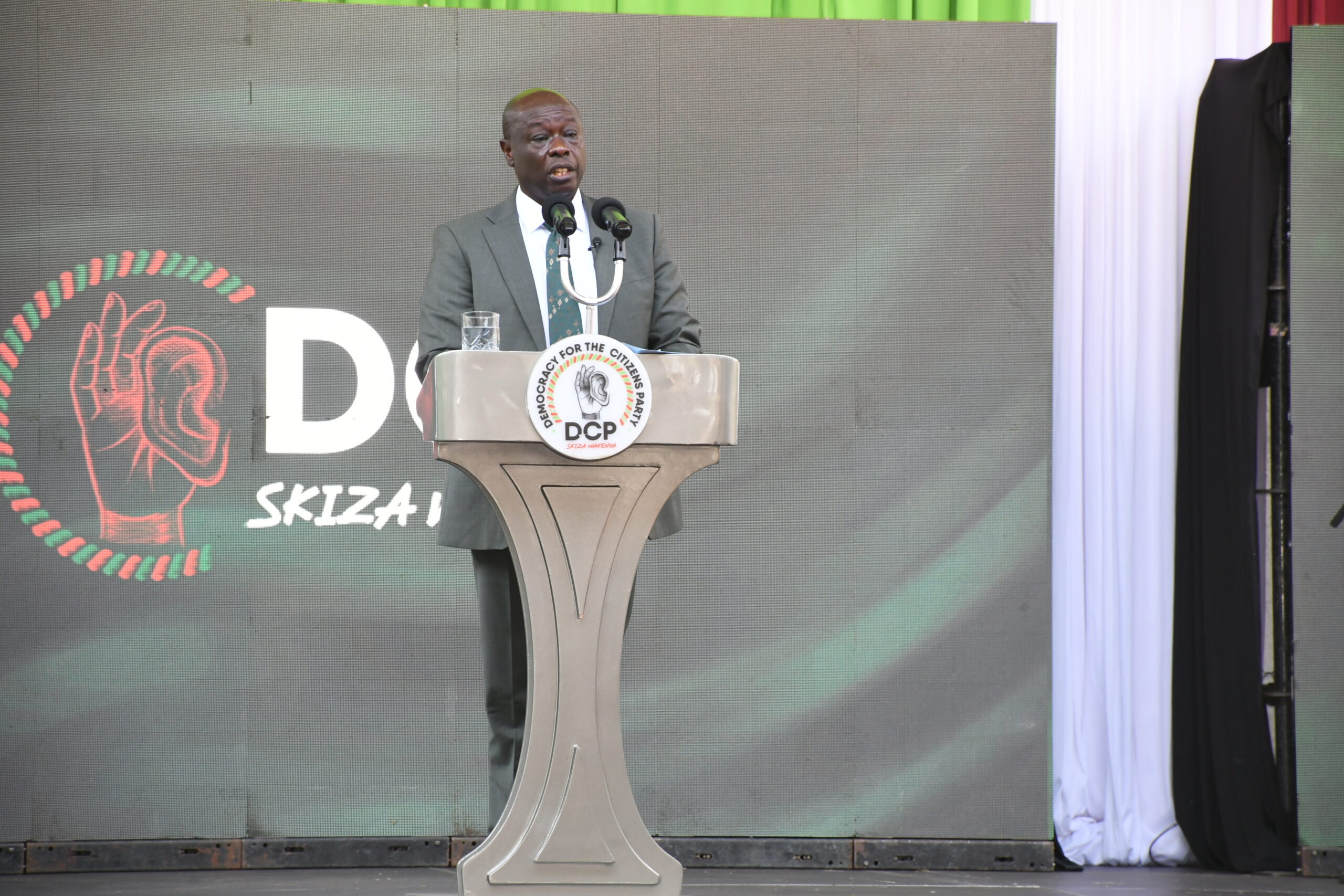
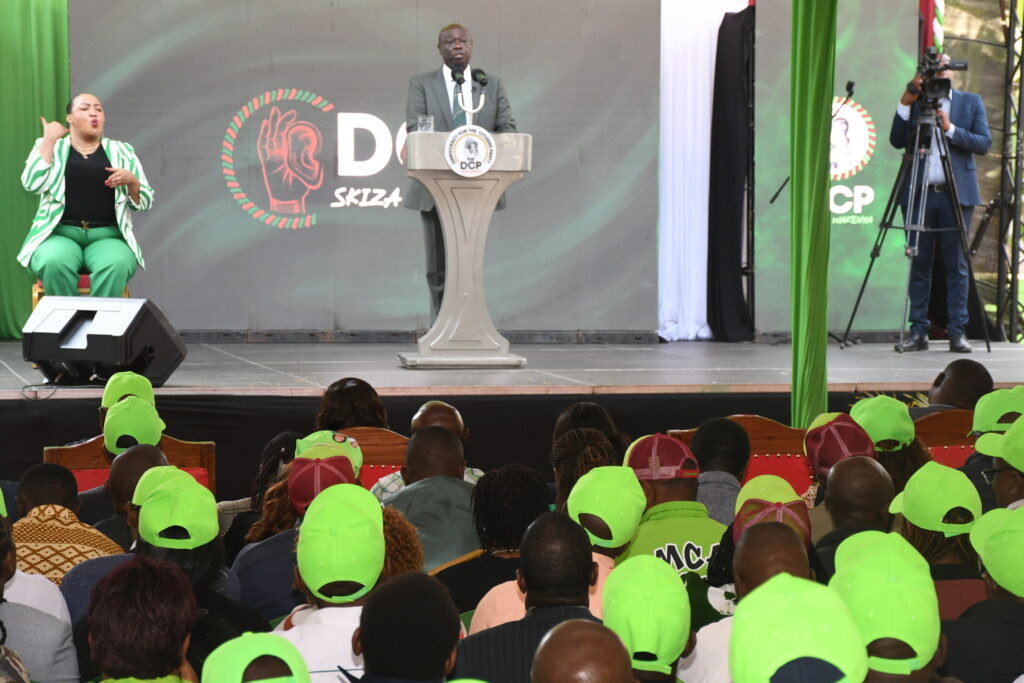
NAIROBI, Aug. 11 — Democracy for the Citizens Party (DCP) leader and former Deputy President Rigathi Gachagua has accused the Kenya Kwanza administration of failing to fulfil key promises it made to Kenyans during the 2022 General Election.
Gachagua said the administration had fallen short on commitments in areas including youth empowerment, affordable credit, healthcare, education, housing and agriculture, arguing that the failure had increased the economic burden on ordinary Kenyans.
Speaking on Tuesday, Gachagua singled out the Hustler Fund, saying the programme had failed to achieve its intended objective of providing affordable credit to small businesses and vulnerable groups.
He questioned the impact of the fund, arguing that some of the amounts disbursed were too small to enable beneficiaries to establish or expand sustainable businesses.
“The Hustler Fund was intended to ease financial constraints, promote enterprise and improve the livelihoods of ordinary Kenyans,” he said, while criticising what he described as high loan default rates and inadequate access to meaningful credit.
Gachagua also criticised the Affordable Housing Programme, alleging that the government had imposed deductions on workers without giving Kenyans sufficient choice over participation.He called for the programme to be made optional, saying Kenyans should have the freedom to decide whether to contribute towards it.
On governance, the former Deputy President accused the administration of undermining independent constitutional institutions and weakening Parliament’s oversight role.
He alleged that Parliament had failed to adequately scrutinise government policies and legislation, including financial legislation that he claimed had increased the burden on citizens.
Gachagua further raised concerns over the independence and public confidence in electoral institutions ahead of the 2027 General Election.He also criticised the government’s reforms in the health sector, particularly the transition from the National Health Insurance Fund (NHIF) to the Social Health Authority (SHA).
The DCP leader described the SHA system as unsuccessful and claimed that the discontinuation of programmes such as Linda Mama and Edu Afya had left families facing increased healthcare costs.
He said the termination of Edu Afya had particularly affected secondary school students and placed additional financial pressure on parents.
Turning to education, Gachagua accused the government of failing to provide adequate funding to schools and universities, saying rising operational costs had placed institutions under financial strain.
He claimed that public universities were facing mounting debts and financial difficulties, while parents were increasingly shouldering the cost of education.
On agriculture, Gachagua said the government had failed to deliver on its pledge to invest in the sector and transform Kenya from a food-deficit country into a food-surplus producer.
He cited rising input costs, taxation, transportation expenses and imports as some of the challenges facing farmers.
Gachagua particularly raised concerns over the rice, sugar and tea sectors, arguing that government policies and imports had negatively affected local producers.
He questioned the decision to allow the importation of large quantities of rice, saying such measures could undermine local farmers who were struggling to find markets for their produce.
The former Deputy President also accused the administration of concentrating economic opportunities among politically connected individuals, allegations that the government has previously rejected.
He further accused President William Ruto of failing to honour a campaign pledge to establish a public inquiry into alleged cronyism and state capture.
Gachagua alleged that the government had instead increased its control over independent institutions, public procurement and strategic state assets.He also raised allegations concerning land ownership and alleged grabbing of public and community land in various parts of the country, calling for greater scrutiny of land transactions.
On the economy, Gachagua claimed that businesses were struggling under increased taxation and what he described as unfavourable government policies.He said traders, contractors and small-scale enterprises were among those experiencing difficulties, accusing the administration of failing to create an environment conducive to private enterprise.
Gachagua’s criticism comes as political parties and leaders intensify preparations for the 2027 General Election, with the performance of the Kenya Kwanza administration expected to remain a major issue in political debates.
The former Deputy President was removed from office through an impeachment process in October 2024 and has since become a leading critic of the administration he helped form after the 2022 elections.
The government has defended its record, maintaining that its programmes in housing, healthcare, agriculture, education and youth financing are aimed at improving livelihoods, expanding economic opportunities and addressing longstanding structural challenges facing the country.