
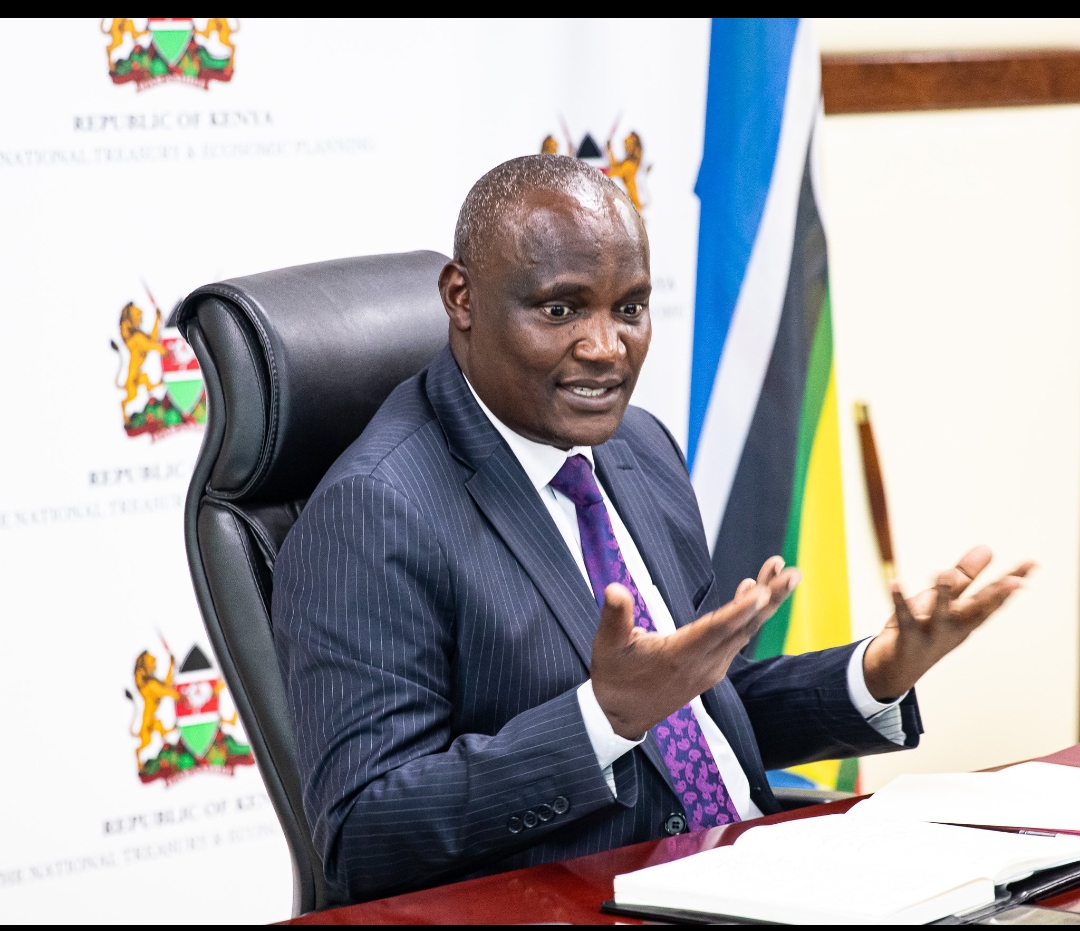
The National Treasury Cabinet Secretary John Mbadi has clarified why the plan to reduce Pay as You Earn (PAYE) for workers earning below Sh30,000 has not been included in the proposed Finance Bill 2026, saying the decision was guided by ongoing revenue assessments and the need to balance the national budget amid competing economic pressures.
Addressing the media on Monday 11th May, Mbadi stated that the government is still evaluating the fiscal impact of the proposal, warning that it could create a significant funding gap if introduced without corresponding revenue measures.
According to Mbadi, Treasury is running continuous simulations while factoring in both local and global shocks affecting revenue income.
‘‘The simulation is presently being done. Actually, we have some reports. What we were checking was, you know, there are so many things happening at the same time. Remember, there is a war in the Middle East. We are looking at the impact of that war. Already, we have reduced VAT on petroleum products; we don’t know for how long. So that is something we must factor into our revenue projections. We are also looking at the overall impact on the economy,” he said.
YOU ALSO MISSED: https://safinews.co.ke/government-stores-ammunition-and-arms-intercepted-in-lamu-nairobi-bound-bus/
He added that ongoing tax reforms at the Kenya Revenue Authority (KRA), especially on personal income tax, are expected to support revenue mobilisation
“But there are reforms that we have also implemented at the Kenya Revenue Authority, particularly targeting personal income tax. We wanted the personal income to broaden the base for personal income tax to increase, and then that would help us to compensate for the loss in this pay-as-you-earn,” he said.
He further revealed that discussions with President William Ruto had already leaned towards including the PAYE adjustment in the Finance Bill despite the fiscal pressure
‘’We are in talks with the President and this is an amendment that we may carry, even regardless of the impact it will have on our revenue, because we feel it is important for the economy. So, chances are that very high that this amendment will be carried in this Finance bill, not waiting for the tax laws amendment we want,” he said.
Treasury is still reviewing data from the Kenya Revenue Authority covering March, April, and May to determine the final impact
‘‘We were doing simulations, assessing and looking at the records from the Kenya Revenue Authority. Remember, Kenya Revenue Authority told us that the impact of personal income tax reforms would be realised for March, April, and May. So, we are trying to look at those figures just to see the final impact, but I will tell you that consideration is being made to include this adjustment in this bill, not the tax laws amendment bill coming later,” he said.
KINDLY READ OUR STORIES: https://safinews.co.ke/murkomen-says-rutos-economic-security-push-paying-off/
On the proposed tax structure, Mbadi explained the intended relief measures for low-income earners.
“We are proposing that the tax allowable amount where we have the tax relief, if you’re earning up to Sh24,000, you pay zero tax, because the tax relief is equal to the tax payable. Now we wanted to move that to Sh30,000 and zero-rate it from one shilling, because no one earns zero shillings. From one shilling to Sh30,000, you pay 0 per cent, then from Sh30,000 to Sh50,000, you pay at 25 per cent. Yet today, from Sh38,800 to Sh50,000 and above Sh50,000, you pay at 30 per cent, so that is a reduction of 5 per cent,” he stated