
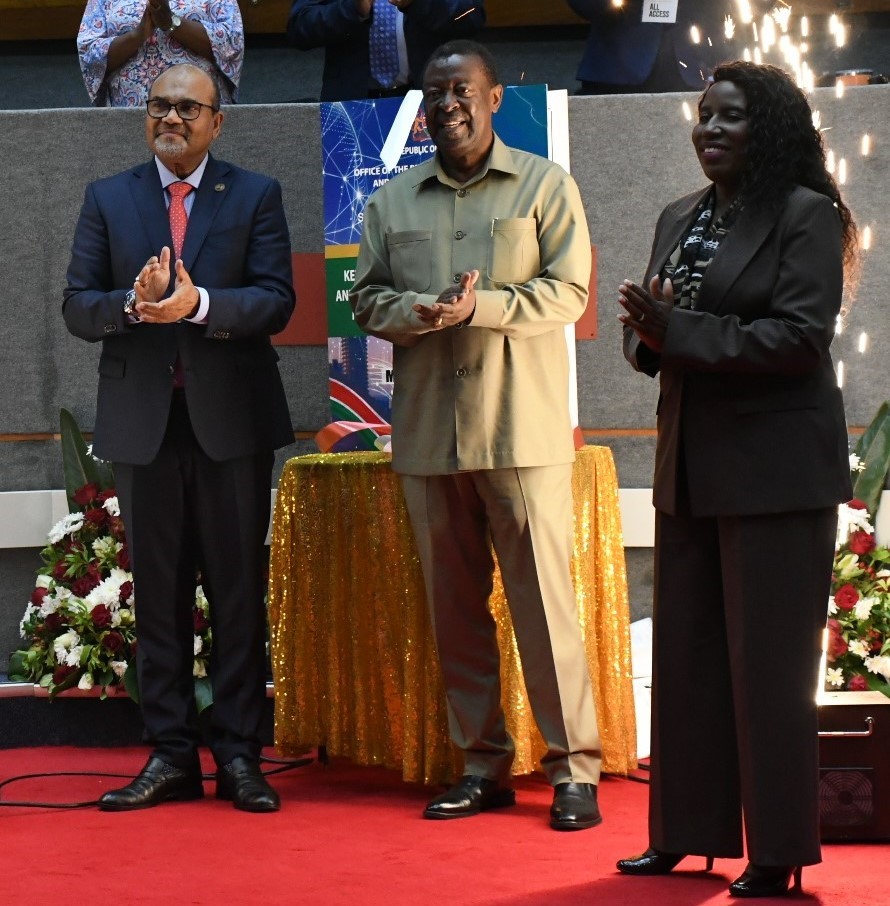
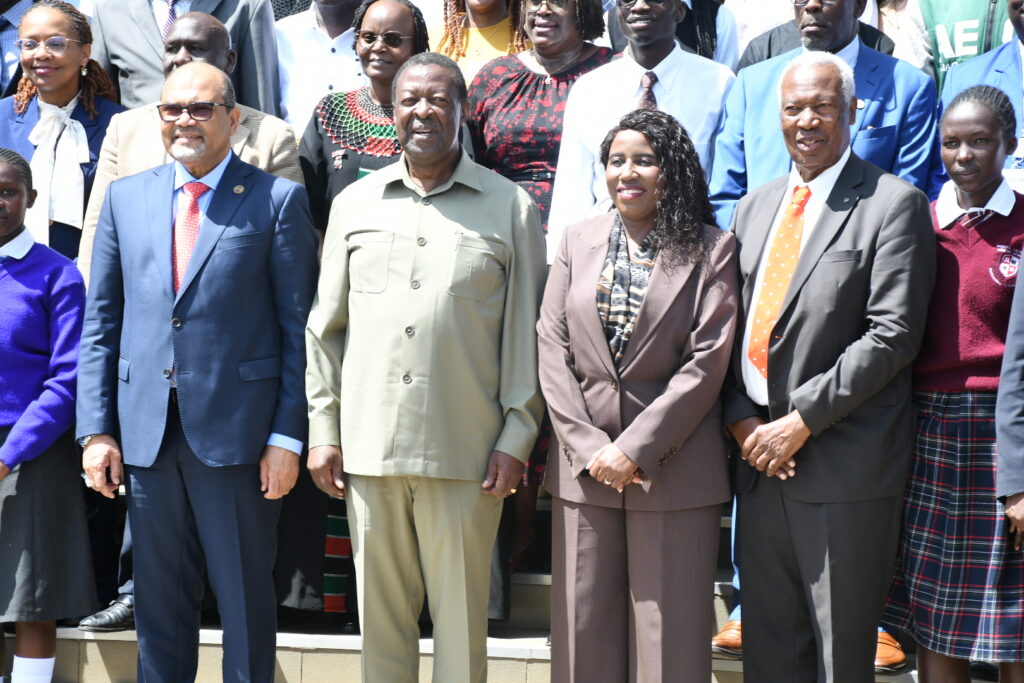
Prime Cabinet Secretary and Cabinet Secretary for Foreign and Diaspora Affairs Dr. Musalia Mudavadi has called for stronger science diplomacy, increased investment in research, and deeper collaboration between government, academia, industry, and international partners to accelerate Kenya’s innovation agenda.
Speaking during the closing ceremony of the Science, Technology, Research and Innovation for Society (STRI4Society) Week 2026 at the Kenyatta International Convention Centre (KICC), Nairobi, Mudavadi said science, technology, research, and innovation must be central pillars of Kenya’s economic transformation.
He noted that STRI4Society Week had demonstrated the transformative power of science in addressing national and global challenges while providing a platform for policy dialogue, knowledge exchange, and showcasing Kenya’s scientific and innovation potential.
Mudavadi highlighted the importance of strengthening university–industry linkages, saying research must be translated into practical solutions that create jobs, enterprises, patents, and policy impact.
“Universities must not only produce graduates, but also produce solutions,” he said.
READ ALSO: https://safinews.co.ke/uda-condemns-killing-of-woman-over-president-ruto/
The Prime Cabinet Secretary called for the establishment of thematic research clusters and centres of excellence in priority sectors including artificial intelligence, agriculture, health sciences, climate resilience, biotechnology, blue economy, advanced manufacturing, and clean energy.
He said such clusters would strengthen coordination, enhance infrastructure sharing, and accelerate commercialization of research outputs.
Mudavadi also emphasized the expansion of Research Chairs in universities and research institutions, noting that they are critical for intellectual leadership, mentorship, and aligning research with national development priorities.
He further underscored the need to “socialize science,” saying public understanding of science is key to building trust, promoting investment, and strengthening evidence-based policymaking.
“When society understands science, it invests in science,” he said.
He added that combating misinformation requires stronger collaboration between scientists, policymakers, media, and communities.
Mudavadi reaffirmed Kenya’s commitment to advancing science diplomacy and strengthening international partnerships to position the country as a regional hub for science, technology, research, and innovation.
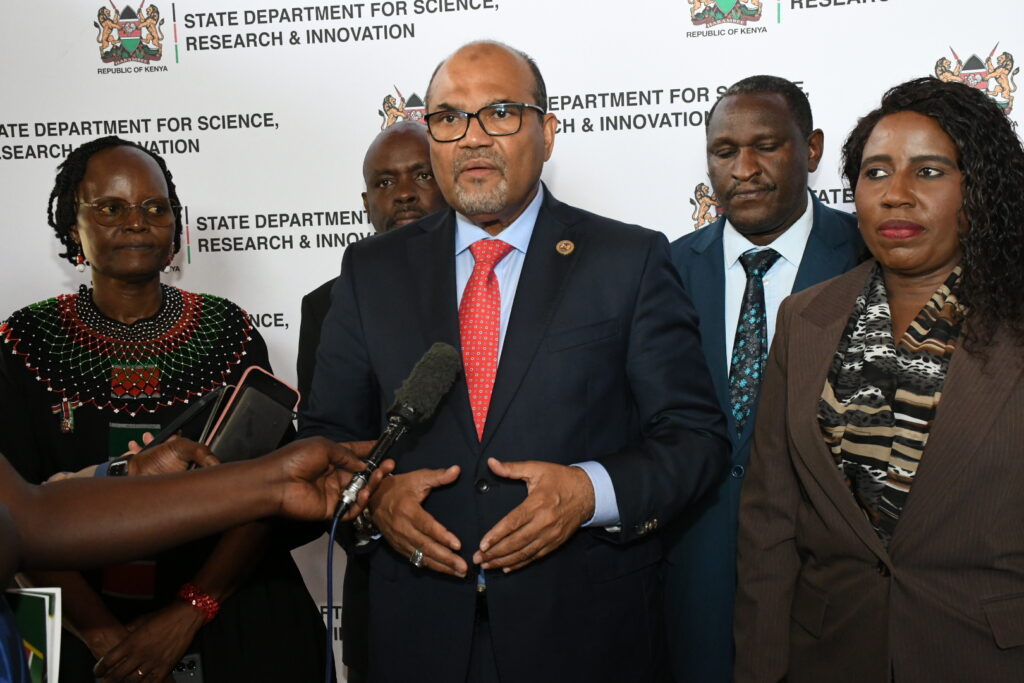
The closing ceremony also featured remarks from Principal Secretary for the State Department for Science, Research and Innovation, Prof. Shaukat Abdulrazak, who announced the establishment of the Grand Challenges Kenya Platform to support Kenyan-led innovations through domestic research funding.
Prof. Abdulrazak said the platform will provide competitive grants to researchers and innovators, including six early-stage grants of up to USD 200,000 each and up to four transition-to-scale grants of up to USD 350,000 over five years.
He said the initiative places Kenya among African countries such as Rwanda, Nigeria, Senegal, Ethiopia, Malawi, Botswana, and South Africa, which are already operating similar innovation funding platforms.
He called on development partners, academia, industry, and investors to support the initiative in building a sustainable innovation ecosystem.
YOU ALSO MISSED: https://safinews.co.ke/uda-condemns-killing-of-woman-over-president-ruto/
Principal Secretary for Higher Education and Research, Beatrice Inyangala, also highlighted the importance of strengthening research commercialization, STEM education, and youth innovation, noting that Kenya must invest in science as a long-term driver of competitiveness and sustainable development.
The STRI4Society Week 2026 brought together government officials, researchers, academia, industry players, students, development partners, and innovators for discussions on artificial intelligence, climate change, health, agriculture, biodiversity, and the blue economy.