

The Railway Training Institute (RTI) is repositioning itself as a leading regional centre for technical and engineering training as it steps up efforts to expand industry-relevant programmes, improve public visibility, and address persistent funding challenges affecting student access.
The institute, which marks 70 years since its establishment on June 29, is also using the milestone to strengthen its brand, deepen stakeholder engagement, and highlight its evolving role beyond rail-specific training.
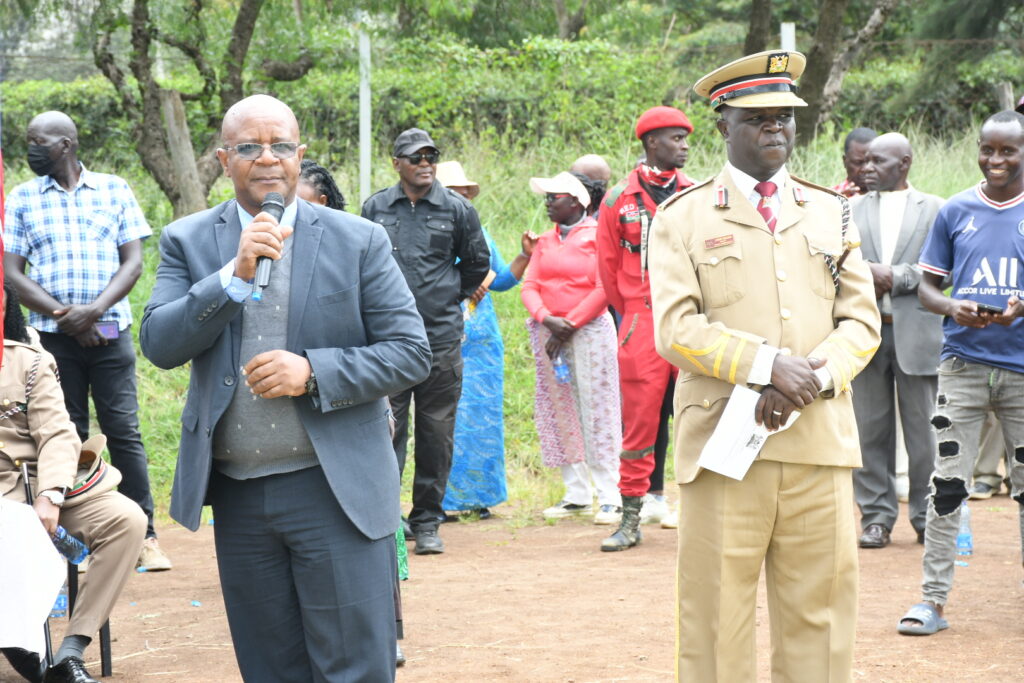
Speaking during an engagement on the institute’s operations and future direction, RTI Director Wilberforce Kadima said the institution has grown into a centre of excellence for technical education but remains largely unknown among many Kenyans.
YOU ALSO MISSED: https://safinews.co.ke/ruto-commissions-sh460-million-eldas-water-supply-project/
“One thing I also noticed is we are still not known out there as RTI. People associate RTI with railways only, yet there is more beyond railways that we undertake,” Kadima said.
Shift to technical training driven by market demand
Kadima noted that the institute has gradually shifted its focus toward engineering and technical programmes in response to labour market demands, with business-related courses experiencing declining enrolment.
“You find that our intake is so poor in business that we are now almost focusing basically on technical courses. That’s where the market is having a lot of up take,” he said.
Currently, the institute offers training in civil, mechanical, electrical, and railway engineering, alongside short-term specialised programmes aimed at upskilling industry workers.
According to Kadima, student preferences strongly favour technical disciplines.
“When we do career talks, 90 percent of students want engineering and technical courses. Only a small number choose business,” he said.
Training output and industry exposure
The Railway Training Institute (RTI) trains about 8,000 students annually, with capacity to expand to approximately 10,000. However, the number of graduates transitioning into the labour market remains lower than expected.
“We release about 1,200 students annually. Ideally, we should be looking at between 2,000 and 2,500 exiting into the market to show strong participation,” Kadima said.
The institute also runs short industry exposure programmes lasting one to two weeks, which are designed to bridge the gap between training and practical skills. This year, more than 50 participants have benefited from such programmes under Kenya–China government collaboration initiatives focusing on engineering skills development.
Kadima further noted that in 2017, RTI trained about 100 engineers under a scholarship programme in China, who have since been deployed across various sectors in the country.
“Those engineers were trained and have come back. They are now distributed across the country supporting different sectors,” Kadima said.
Expansion of specialised programmes and regional campuses
The Railway Training Institute (RTI) is also expanding specialised training in railway engineering, marine studies, and hospitality to respond to emerging regional needs.
Kadima highlighted the Kisumu campus as a marine-focused training hub serving the Lake Victoria Basin, extending to neighbouring Uganda and Tanzania.
“Kisumu is marine-based. The presence of Lake Victoria gives us a strong ecosystem for marine engineering and safety training. It is the only successful marine training institution in the region,” he said.
The Mombasa campus is being developed into a key centre for hospitality and railway operations training, addressing skills gaps along the coastal region and supporting Kenya Railways Corporation operations.
“We identified a gap in Mombasa, especially in hospitality and railway operations. That campus becomes a primary training facility for staff in the region,” he said.
A proposed Kitui campus is still under planning, we are in partnerships with Members of Parliament and county governments to support long-term expansion efforts.
Funding gaps affecting access
Despite its expansion, the Railway Training Institute (RTI) continues to face financial constraints, particularly in supporting students from low-income backgrounds.
Kadima said that the institute is not adequately covered under major national funding schemes.
“CDF does not support us; HELB does not support us. Even institutions like ours outside mainstream university frameworks struggle to access funding,” Kadima said.
He proposed the creation of a pool financing mechanism that could support between 200 and 300 students per intake, arguing that fragmented support systems limit access to technical education.
Branding and institutional visibility drive
The Railway Training Institute (RTI) has now launched a renewed branding and communications strategy aimed at increasing awareness of its programmes and strengthening its national presence.
He acknowledged that despite its long history, public awareness remains low.
“You can be 70 years old and your visibility is less than 10 percent. That is not acceptable. We must do more publicity,” he said.
The institute is also increasing community engagement by hosting public events, religious gatherings, and institutional functions on its premises.
“We want to remain a purely mid-level technical institution. That is our mandate and where we add the most value,” he said.
As the Railway Training Institute (RTI) marks 70 years of existence, the institution is balancing expansion, financial sustainability, and brand visibility as it seeks to strengthen its position as a key technical training hub in Kenya and the wider region.