
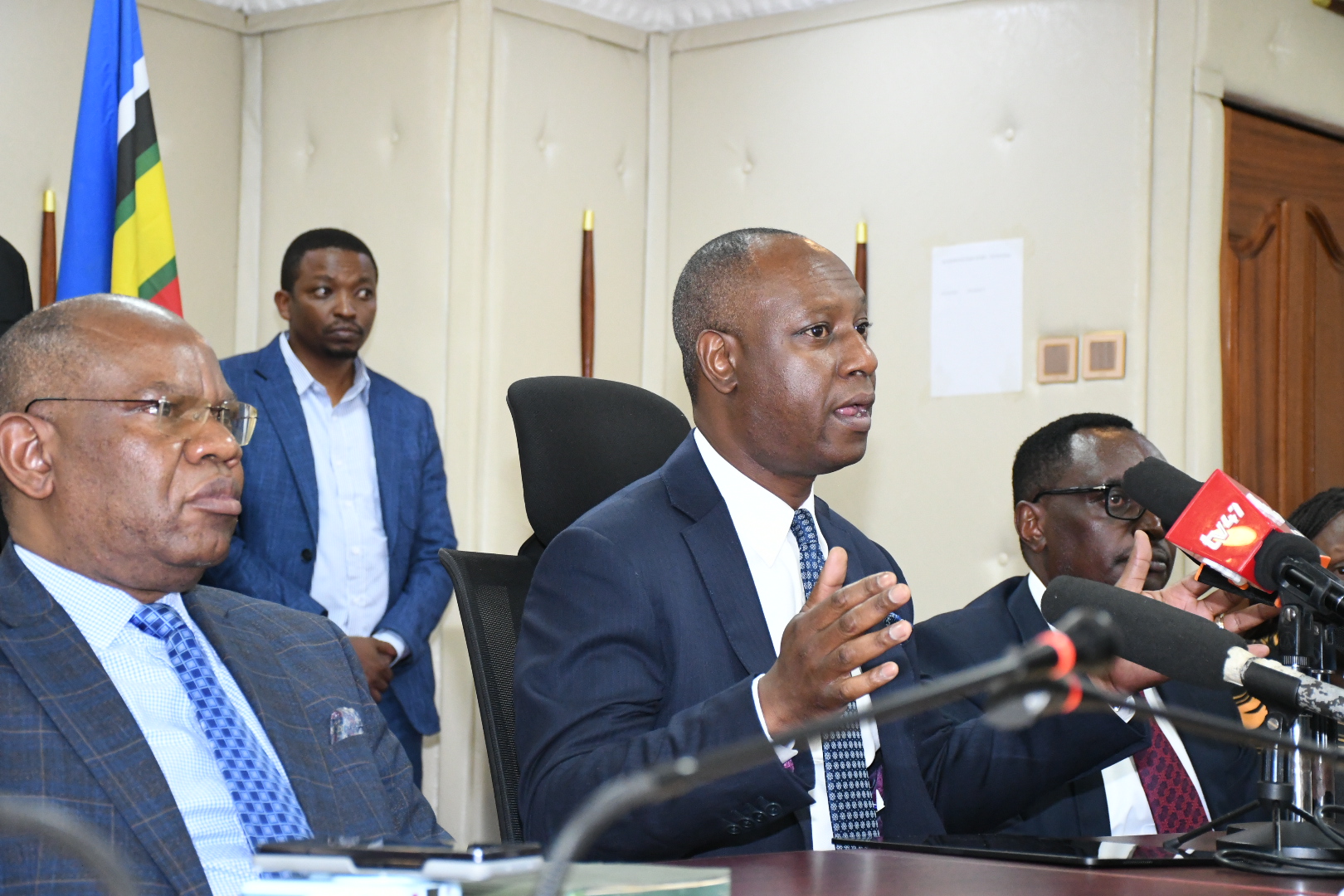

The Government has moved to address the current shortage of milk in the country after prolonged drought caused a decline in milk production and put pressure on animal feed supplies.
Principal Secretary for Livestock Development Jonathan Mueke said the Government, working with dairy processors, farmers, cooperatives, feed manufacturers and regulators, had agreed on a raft of short, medium and long-term measures to restore adequate milk supplies to consumers.
Mueke said milk production declined by about 3.7 per cent between June and July, with preliminary indications pointing to a further decline in August due to the prolonged dry spell.
“The real issue is fodder pressure due to lack of grain,” said Mueke, adding that the drought had affected not only Kenya but also the wider region.
He said the decline in production had resulted in limited supplies to processors, leading to shortages of milk in retail outlets.
The PS spoke after meeting dairy stakeholders, including Kenya Dairy Processors Association Interim Chairman Kenneth Gitonga and Kenya Dairy Board Chairman Genesio Mugo, to deliberate on measures to stabilise milk production and supply.
Mueke said the Government would engage animal feed manufacturers, including the Animal Feed Manufacturers Association (AFEMA), to identify areas with surplus animal feed and facilitate its distribution to dairy farmers through cooperatives and processors.
“A hungry cow does not produce milk,” he said, stressing the need to ensure farmers have adequate fodder during the dry period.
He further said the Government had approved duty-free importation of yellow maize for use as a raw material in the manufacture of animal feed.
The measure, he said, was being processed and was expected to be gazetted soon, allowing feed millers to import the maize and increase the availability of animal feed to farmers.
Mueke said the Kenya Dairy Board would also lead efforts to ensure farmers received fair prices for their milk to discourage them from selling through brokers and other informal channels.
He said the regulator would monitor milk production and its movement on a daily basis to ensure processors had adequate raw material to meet consumer demand.
The PS said the Government was also considering establishing a milk stabilisation fund that would enable the industry to mop up surplus milk during periods of high production, process and store it in powdered form, and release it when production declines.
“This is going to stabilise the pricing of milk and also the supply of milk,” he said.
Mueke noted that milk production had historically fluctuated with weather patterns, with farmers producing more milk during rainy seasons and less during prolonged dry periods.
He said Kenya had recorded exceptionally high milk production following three good rainy seasons, supported by interventions in animal genetics, feed, vaccination and milk-cooling infrastructure.
However, he said the cyclical nature of production had often resulted in low prices when milk was abundant and shortages when production fell, creating challenges for farmers and consumers alike.
The PS also raised concern over governance in some dairy cooperatives, saying some were buying milk from farmers at prices of Sh60 or more per litre but passing on only a small portion of the proceeds to producers.
He said he had engaged the State Department for Cooperatives and the Commissioner for Cooperatives over the matter.
According to Mueke, cooperatives would be required to operate within existing regulations and limit their margins to the allowable two or three shillings for value addition, ensuring farmers benefited from their investments in dairy farming.

Kenya Dairy Board Chairman Genesio Mugo said the prolonged drought had affected both the dairy and crop sectors, prompting the Government to approve the importation of 500,000 tonnes of duty-free yellow maize to cushion animal-feed manufacturers from shortages and rising raw-material costs.
He said the measure was expected to help stabilise feed prices and prevent an increase in the cost of production for farmers. Mugo added that the Government had an off-take programme for livestock in the event of a prolonged drought, although current conditions in the beef value chain did not yet warrant its activation.
On milk prices, Mugo said the interventions being implemented should prevent significant increases arising from normal supply-and-demand pressures. He said the Kenya Dairy Board would monitor prices to ensure they remained within the recommended retail price range.
“We don’t see the prices going out of control, but we are going to monitor this situation on a daily basis and communicate if anything changes,” Mugo said.

Meanwhile, Gitonga, who is also the Chief Executive Officer of Meru Dairy, and Chairman of Kenya Dairy Processors Association reassured consumers that the current shortage was temporary and should not cause panic.
He said milk supplies had declined by about three per cent and was expected to stabilise within the next two weeks, although the industry remained cautious over the possibility of a wider supply gap if dry conditions persisted.
Gitonga said dairy processors had agreed to collect every available drop of milk from farmers and make efforts to pay competitive prices to encourage increased production.
He also assured consumers that processors would strive to maintain stable milk prices despite the current supply constraints.
“We have agreed that we ensure every milk drop is mopped up and provided to the customer,” he said.
Gitonga urged Kenyans to remain patient and support the dairy industry as stakeholders work to restore normal supplies, noting that the Meteorological Department had forecast the onset of rains in the coming weeks.
Mueke said the Government would continue monitoring the situation and provide regular updates to the public on milk production, farmer prices, processor supplies and retail prices.
He said the Government’s objective was to ensure farmers received fair returns, processors had sufficient milk to manufacture dairy products and retailers did not exploit consumers by charging prices above the recommended retail prices.