
Support Independent Journalism by making small donations:
📞AIRTEL: +254106960261, MPESA: +254181609083
✉️ Email: safinews2022@gmail.com
Kenya is seeking to increase the proportion of goods consumed locally that are manufactured in the country from the current 30 per cent to 50 per cent, in a renewed push to reduce reliance on imports, create jobs and boost value addition.
Principal Secretary for Industry Dr. Juma Mukhwana said the country imports nearly 70 per cent of the goods it consumes, highlighting the need to strengthen domestic manufacturing and expand local production.
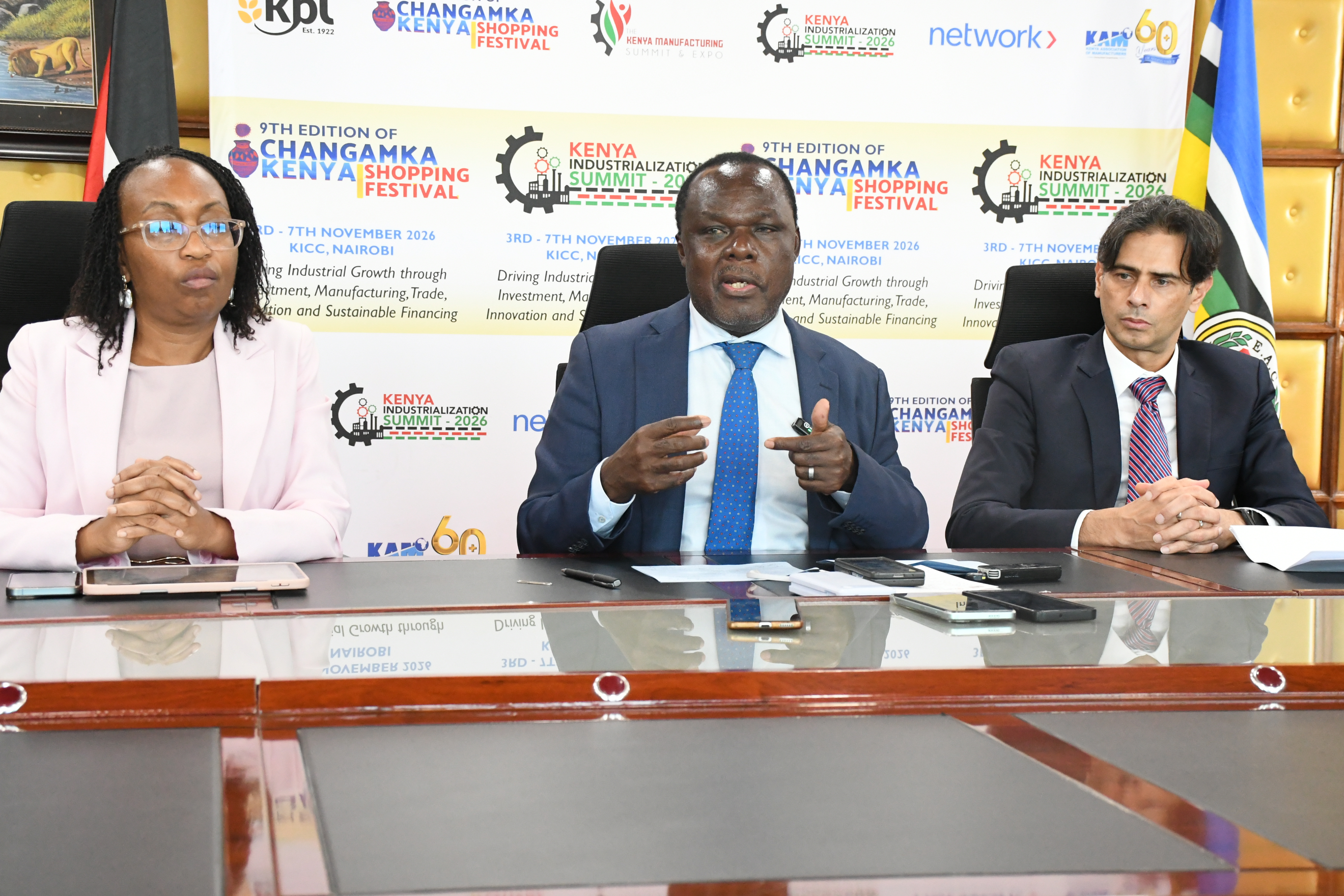
Speaking in Nairobi on Wednesday during a media briefing ahead of the Kenya Industrialisation Summit and Changamka Shopping Festival scheduled for November, Mukhwana said the government was determined to increase the contribution of locally manufactured products to the domestic market.
“We want to have a Kenya where we are manufacturing 50 per cent of all the items that we need,” he said.
Mukhwana said industrialisation was a key driver of economic transformation, urging the country to move away from exporting raw materials towards processing them into finished and higher-value products.
He identified tea, coffee, avocados and macadamia nuts among agricultural products with significant potential for local processing, noting that value addition could create employment opportunities while strengthening Kenya’s export earnings.
The Principal Secretary also highlighted the role of County Aggregation and Industrial Parks (CAIPs) in decentralising manufacturing and creating opportunities for investment beyond Nairobi and neighbouring counties.
He said 34 county industrial park projects had been undertaken, with 15 completed and the remaining projects at different stages of implementation.
Mukhwana called on county governments to provide land for industrial development and prioritise the processing of locally available raw materials to support manufacturing growth.
He said closer cooperation between the national and county governments was necessary to accelerate industrial development and ensure counties benefited from investments in production and value addition.
The PS further pointed to regional and international trade agreements as opportunities for Kenyan manufacturers to expand their markets, saying increased production capacity would enable local firms to take advantage of improved access to international markets.
Kenya Association of Manufacturers (KAM) Chairperson Hitesh Mediratta said increased demand for locally produced goods would encourage manufacturers to expand operations, invest in innovation and develop new products.
Mediratta said the Changamka Shopping Festival would give manufacturers an opportunity to showcase Kenyan-made products and connect with consumers, retailers, distributors and potential business partners.
More than 200 exhibitors are expected to participate in the festival, which seeks to promote local products and strengthen the relationship between manufacturers and consumers.
He urged Kenyans, government agencies and other institutions to prioritise locally manufactured goods, saying increased uptake would support businesses and stimulate domestic production.
However, Mediratta said manufacturers needed an enabling business environment to compete effectively with imported products.
He cited affordable financing, reliable and competitively priced energy, efficient transport and logistics, modern infrastructure, and predictable tax and regulatory policies as key requirements for lowering production costs and improving competitiveness.
The KAM chairperson also called for effective implementation of trade agreements, including the African Continental Free Trade Area (AfCFTA), the Kenya-European Union Economic Partnership Agreement and the African Growth and Opportunity Act (AGOA), to help local firms access wider markets.
He stressed that promoting Kenyan-made products must go hand in hand with quality, affordability and innovation to build consumer confidence and ensure locally manufactured goods remain competitive.
Meanwhile, United Nations Industrial Development Organization (UNIDO) Deputy Representative and Partnerships Officer Lynette Luvai said access to adequate and innovative financing remained critical to industrial development, particularly for micro, small and medium-sized enterprises.
Luvai noted that businesses owned by women and young people also needed better access to financing to participate more effectively in manufacturing and industrial value chains.
She said industrialisation was essential for creating decent jobs, increasing value addition and building resilient economies while enabling African enterprises to compete in regional and international markets.
Luvai reaffirmed UNIDO’s commitment to working with the Government of Kenya, KAM and other partners to promote competitive, inclusive and sustainable industrial development.
She said the summit and shopping festival would bring together manufacturers, investors, universities, technical and vocational education and training institutions, and other stakeholders to deliberate on industrial policy, financing, innovation and market access.
Mukhwana said the summit was expected to generate recommendations on improving the competitiveness of Kenyan products, attracting investment into manufacturing and strengthening collaboration between government, industry and academia.
He also encouraged Kenyans to consider manufacturing as a viable investment opportunity, noting that entrepreneurs could begin on a small scale and expand their businesses as they developed products and accessed new markets.
The Kenya Industrialisation Summit and Changamka Shopping Festival are part of broader efforts to promote local manufacturing, deepen value addition and position Kenya as a regional manufacturing and export hub.
Courtesy: Aron Kinyamasyo- KNA