
Support Independent Journalism by making small donations:
📞AIRTEL: +254106960261, MPESA: +254181609083
✉️ Email: safinews2022@gmail.com.
Paybill: 625625
Account No. 20222881
Your support helps us report, inform and amplify stories that matter.
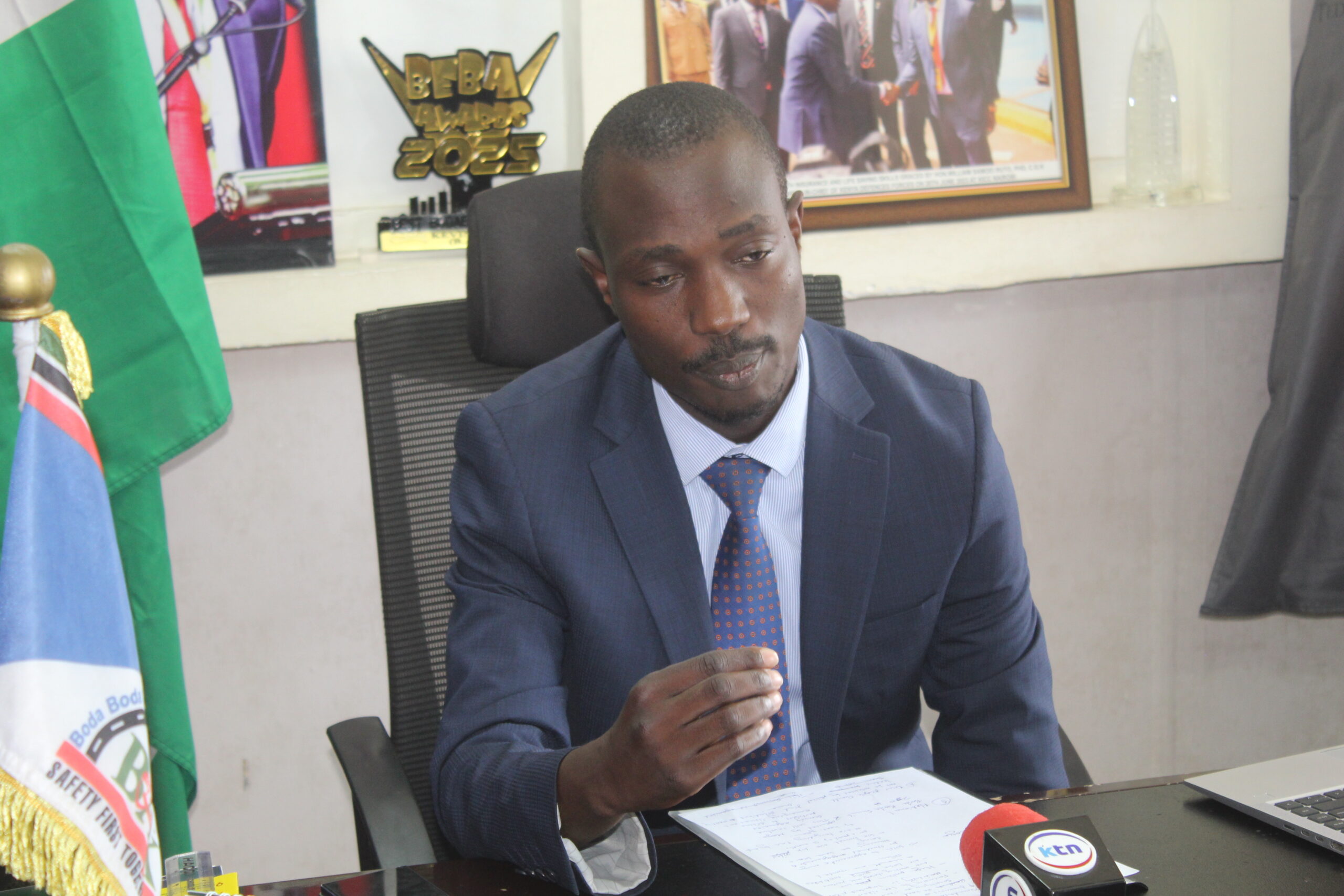
The Boda Boda Safety Association of Kenya has announced plans to train at least one million motorcycle taxi operators in road safety, financial literacy and responsible borrowing by the end of next year as part of efforts to professionalise the sector.
National Executive Chairman Kevin Mubadi said the association had so far reached approximately 50,000 riders through sensitisation programmes conducted over the past three months in partnership with motorcycle financier Mogo.
Speaking during a media briefing on Tuesday, Mubadi said the initiative was aimed at equipping riders with essential knowledge on road safety, responsible borrowing, loan repayment and personal financial management.
He noted that the association was concerned about the increasing challenges facing the sector, particularly road accidents, motorcycle theft and misunderstandings between riders and financial institutions.
“We are focusing on training over one million riders towards the end of next year. So far, we have reached around 50,000 in the last three months, and we are targeting to expand this programme across the country,” said Mubadi.
He explained that the training programme also involved identifying and equipping local leaders with skills to serve as trainers of trainers (ToTs), enabling them to sensitise other riders within their respective areas.
Mubadi urged motorcycle operators to exercise caution during the festive season when increased travel and commercial activities often encourage riders to work for longer hours in pursuit of higher earnings.
He cautioned that the desire to make more money should not compromise their safety, urging operators to observe traffic regulations and avoid reckless riding.
“As we approach the festive season, we want our members across the country to be very careful while riding. People will be moving from one point to another, and riders may be tempted to rush to make more money, but safety must come first,” he said.
The association chairman further disclosed that motorcycle theft remained a major concern, estimating that more than 1,000 motorcycles were stolen every month, resulting in financial losses for both operators and financiers.
He said the association was working closely with security agencies, the police and financing partners to address the problem, noting that motorcycle theft undermined the livelihoods of riders who depend on the machines to support their families.
Mubadi dismissed allegations that some motorcycle financing companies were involved in orchestrating the theft of motorcycles they had financed, saying investigations and engagements with security agencies had not established such claims.
He argued that financiers had invested heavily in the sector and had an interest in protecting their businesses and maintaining their reputation.
“There is no way someone can invest over Sh60 billion and then come to steal a motorcycle worth Sh80,000 or Sh100,000. The issue of motorcycle theft existed even before financiers came into the country,” he said.
Mubadi attributed some of the suspicion directed at financiers to the fact that an estimated 90 per cent of motorcycles in the country were acquired through credit arrangements.
He said stolen motorcycles were sometimes transported across borders, including to Ethiopia and Tanzania, while others were dismantled and sold as spare parts.
The chairman called for stronger cooperation between riders, financiers and security agencies to dismantle criminal networks involved in motorcycle theft.
He also defended the contribution of motorcycle financiers, particularly Mogo, saying access to credit had enabled many young people who could not afford to purchase motorcycles outright to establish livelihoods.
Mubadi estimated that Kenya had approximately 2.5 million boda boda riders, describing the sector as an important source of employment for young people and a contributor to household incomes.
He appealed to the Government to support legitimate investors financing the sector, saying their contribution had helped create economic opportunities for thousands of young people.
The association is also planning a national boda boda summit bringing together more than 250 officials from across the country to deliberate on challenges affecting the industry.
The summit, which will be supported by Mogo, is expected to bring together security agencies, financiers and other stakeholders to discuss road safety, motorcycle theft, access to credit and the relationship between riders and financial institutions.
Mubadi said the meeting would also address the role of boda boda operators during the 2027 General Election, warning against politicians who might seek to exploit riders for political violence.
He urged motorcycle operators to remain peaceful and avoid being drawn into political confrontations that could result in the destruction of their motorcycles and loss of livelihoods.
“As we move towards the elections, our riders should not allow themselves to be misused by politicians. We want them to conduct their businesses peacefully and earn a decent living,” he said.
He called on political leaders to respect the sector and allow operators to remain productive rather than turning their activities into political battlegrounds.
Responding to concerns about riders operating without adequate training, particularly those who acquire motorcycles through financing arrangements, Mubadi said the association had prioritised sensitisation in partnership with Mogo.
He acknowledged that individual behaviour remained a challenge, noting that training alone could not guarantee compliance with traffic regulations unless riders took personal responsibility for their actions.
He said the association would continue conducting county-level sensitisation meetings and encouraging riders to observe traffic laws.
On allegations of mob violence against motorists involved in accidents with boda boda operators, Mubadi said sensitisation efforts had helped reduce such incidents, although he acknowledged that individual cases could still occur.
He maintained that the association was committed to transforming the industry into an organised, respected and secure sector through cooperation among riders, the Government, security agencies and private-sector partners.