
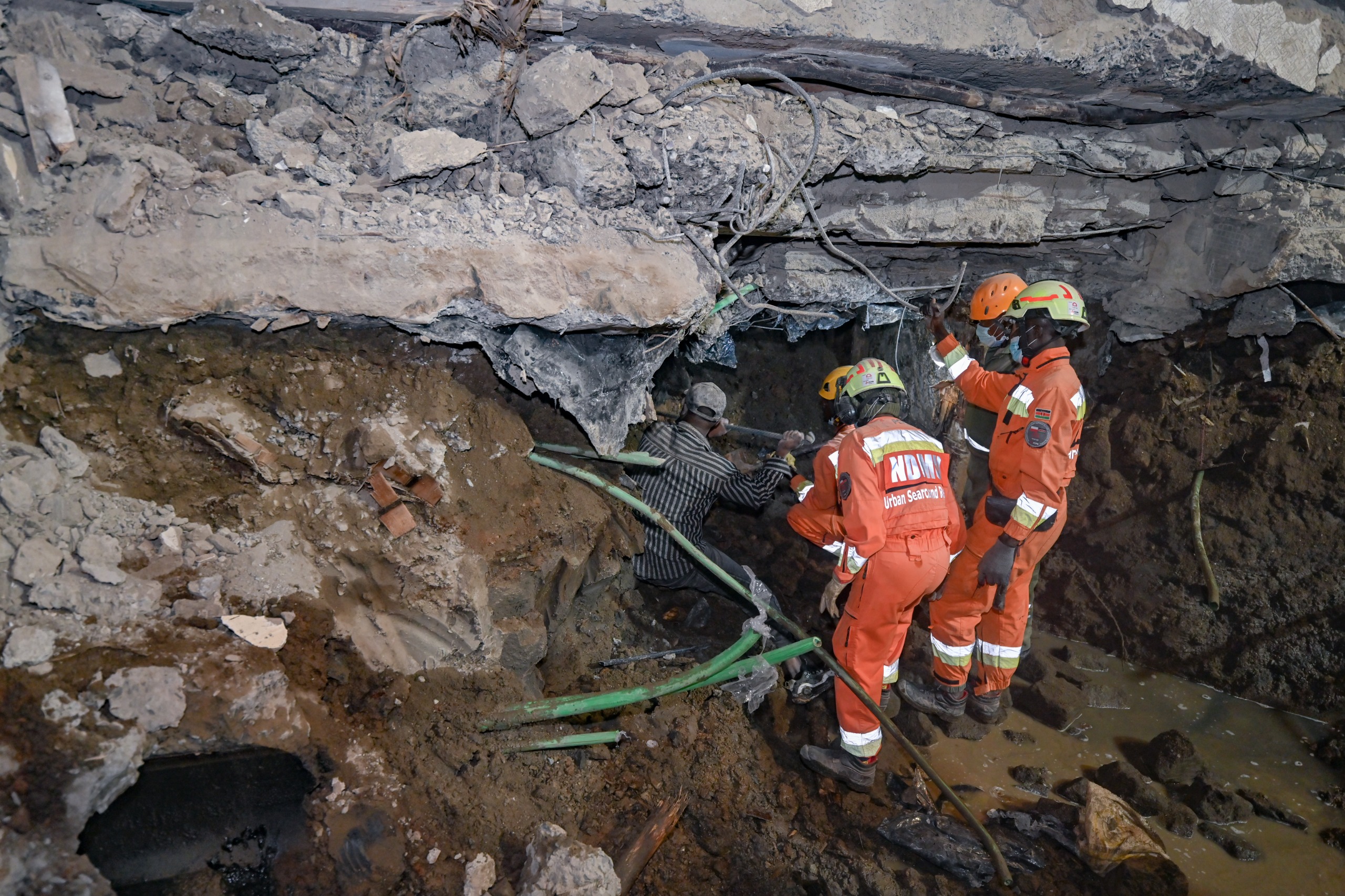

The Architects Alliance (TAA) has called for sweeping reforms in Kenya’s construction sector following the collapse of an 18-storey building under construction in Eastleigh, Nairobi, warning that recurring building failures point to systemic weaknesses in development control and enforcement.
The alliance, led by President Sen. Dr. Arch. Sylvia Kasanga, wants an independent technical investigation into the October 23 incident, a nationwide audit of buildings at risk and the publication of previous building collapse investigation reports to establish why similar tragedies continue to occur.
In a statement issued following the Eastleigh collapse, TAA expressed concern over the repeated incidents, saying the country must address the underlying causes rather than continue responding to disasters after they happen.
“How many more buildings must collapse before we address the systemic failures that continue to put Kenyan lives at risk?” the alliance posed.
The organisation called on authorities to prioritise rescue operations, assess the safety of neighbouring structures and provide timely, accurate information to the public.
It said the precise cause of the Eastleigh collapse must be established through an independent technical investigation, cautioning against drawing conclusions before the relevant technical assessments are completed.
However, TAA maintained that the recurring nature of building collapses raises broader concerns about building approval processes, construction supervision, inspections, professional accountability and enforcement of existing regulations.
The alliance recalled that it had raised similar concerns following a building collapse in South C in January 2026 and reiterated the need for transparent technical investigations, stronger institutional accountability and comprehensive reforms in development control systems in June.
“ We cannot continue investigating collapsed buildings without investigating why the systems meant to prevent their collapse continue to fail,” the statement said.
TAA argued that accountability should cover every stage of a construction project, including design, approvals, construction, supervision, inspection and occupation.
It said anyone found responsible for negligence, professional misconduct, corruption or unlawful conduct should face appropriate consequences through fair and lawful processes.
However, the alliance stressed that investigations and arrests after a collapse were not sufficient to guarantee public safety.
“Accountability after a collapse, while necessary, does not constitute an effective building safety system,” it said, adding that regulatory institutions should ensure unsafe buildings are neither constructed nor occupied.
The alliance urged the National Government, county administrations, Parliament, the National Construction Authority (NCA), the Board of Registration of Architects and Quantity Surveyors (BORAQS) and professional associations to commit to a coordinated national building safety programme.
Among its proposals is an immediate, risk-based audit of ongoing and existing developments, particularly in densely populated urban areas and buildings showing signs of structural distress.
It also wants reforms to ensure that building approvals, professional supervision, statutory inspections and occupation certificates are transparent, technically sound and effectively enforced.
The organisation called for the strengthening of the Office of the City Architect in Nairobi and the establishment of equivalent Offices of Chief Architect across counties to improve professional oversight and provide coordinated technical leadership.
TAA further proposed the establishment of a national building failure investigation and prevention framework, supported by a publicly accessible record of technical findings, recommendations, responsible institutions and progress in implementing corrective measures.
It said previous investigation reports should be made public to enable Kenyans to understand the causes of past building collapses, identify those held accountable and establish whether recommendations were implemented.
“Kenyans deserve to know what previous investigations revealed, who was held accountable, which recommendations were implemented and why similar tragedies continue to recur,” the statement said.
The alliance also called for independent, profession-specific regulatory frameworks for professionals in the built environment, arguing that such systems would safeguard professional autonomy, uphold competency and ethical standards, and ensure accountability without undue political, administrative or commercial interference.
It urged the government to convene an urgent national multi-stakeholder engagement bringing together regulators, professional bodies, developers, contractors and other players in the construction industry to develop a time-bound programme for preventing future building failures.
TAA said building safety required shared responsibility, professional integrity, effective governance and consistent enforcement, rather than isolated investigations and temporary crackdowns.
“We must measure progress not by the number of investigations launched, arrests made or statements issued, but by the number of lives protected and building failures prevented,” the alliance said.
The organisation pledged to contribute its professional expertise and policy proposals towards developing lasting solutions, insisting that public safety must remain central to Kenya’s urban development.
“Kenya cannot afford another cycle of collapse, condemnation and inaction. The time for lasting reform is now,” the statement concluded.
The Eastleigh collapse occurred on October 23, 2026, prompting a response from government and emergency agencies. The cause of the incident remains subject to technical investigation.