
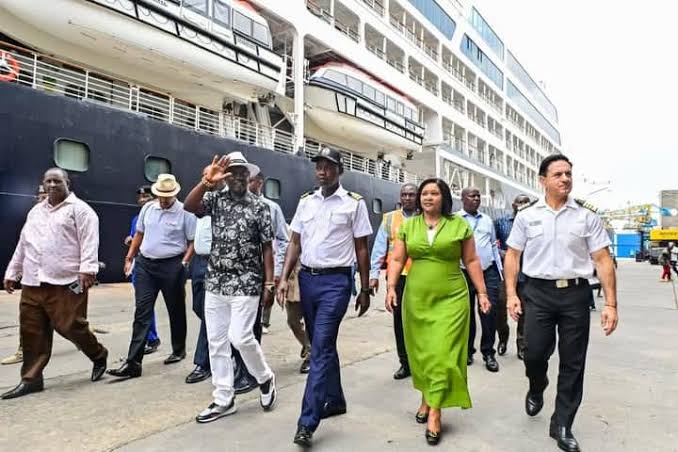
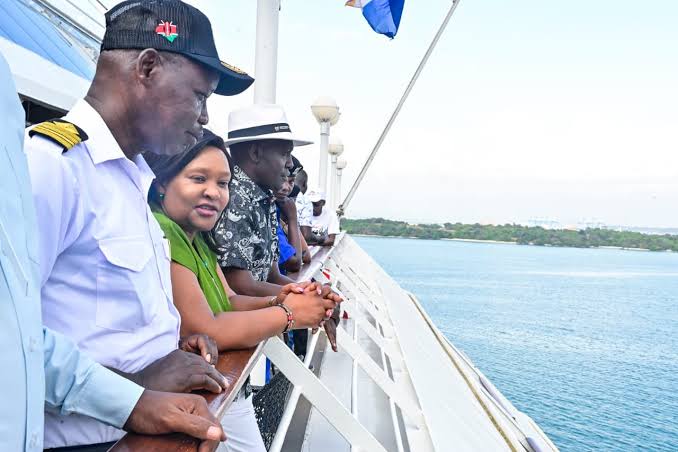
The reality of it is that Kenya is steadily charting a new course in global tourism—one that extends beyond its famed savannahs and into the blue economy of cruise travel.
Long celebrated as the home of the safari, our country is now gaining recognition as a dynamic and increasingly popular cruise tourism destination along the Western Indian Ocean.
You Also Missed: https://safinews.co.ke/cs-miano-leads-the-mtp-iv-county-dissemination-forum-in-laikipia-county/
In recent years, Kenya’s coastline has witnessed a notable rise in cruise vessel arrivals. International ships have been docking at the Port of Mombasa with growing frequency, bringing thousands of visitors eager to explore not just our shores, but the depth of our culture, history, and natural beauty.
This resurgence is no coincidence; it is the result of deliberate policy, targeted investment, and a clear vision to diversify our tourism offering.
For decades, Kenya’s global tourism identity has been closely tied to wildlife safaris—a strength we remain proud of. However, today’s traveler is seeking more varied and immersive experiences.
Recognizing this shift, we have expanded our focus to include coastal and marine tourism, heritage tourism, and urban experiences. Cruise tourism sits at the intersection of these offerings, allowing visitors to sample Kenya’s diversity within a limited timeframe.
The modernization of the Mombasa Port cruise terminal has been central to this transformation. With improved capacity and world-class passenger handling facilities, Kenya is now well-equipped to receive larger vessels and provide seamless services.
These developments have enhanced our competitiveness and positioned Mombasa as a key port of call in regional cruise itineraries.
But the true strength of Kenya’s cruise tourism lies beyond the port itself.
Within hours of docking, visitors can walk through the historic alleys of Old Town Mombasa, relax on the white sands of Diani Beach, or embark on a short-haul safari to experience our iconic wildlife. This unique combination—coast and savannah, culture and nature—sets Kenya apart from many other cruise destinations.
Moreover, the increase in cruise traffic is translating into real economic benefits for local communities. From tour guides and transport providers to artisans and hospitality businesses, a wide range of stakeholders are benefiting from the growing number of cruise passengers. Our policy focus remains clear: to ensure that these gains are inclusive and sustainable.
We are also working closely with cruise operators to promote responsible tourism practices, particularly in marine conservation and waste management. Protecting our coastal ecosystems is not only an environmental imperative but also a strategic necessity for the long-term success of cruise tourism.
Kenya’s emergence as a cruise destination is further strengthened by regional collaboration. By partnering with neighboring countries, we are helping to develop attractive multi-destination cruise circuits that enhance the appeal of the entire Western Indian Ocean. In this ecosystem, Kenya stands out as both a gateway and a highlight.
As we look to the future, our commitment is to build on this momentum. We will continue to invest in infrastructure, strengthen partnerships, and market Kenya as a destination of diversity—not only the land of the Big Five, but also a vibrant coastal and cultural hub.
The message is clear: Kenya is no longer just a safari destination. It is a complete tourism experience—and the world is beginning to arrive by sea to discover it.
This is the origin of Wonder. Karibu Magical Kenya!!!
Rebecca Miano Cabinet Secretary for Tourism and Wildlife